
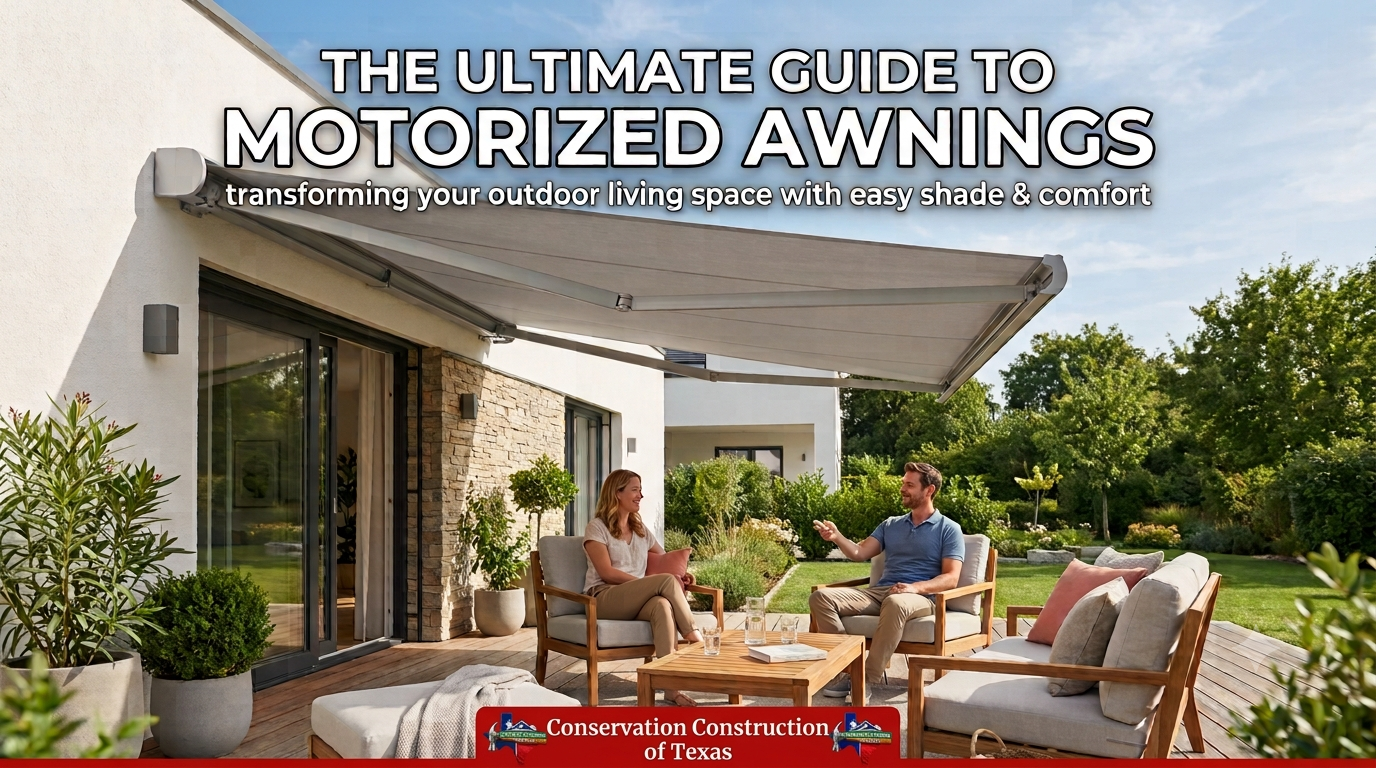
Motorized awnings have quietly revolutionized home outdoor spaces, turning patio shade from a minor chore into a seamless, one-touch experience. While manual crank awnings have served homeowners reliably for decades, the shift toward motorization isn't just about saving a few seconds—it comes down to convenience, durability, smart features, and safety.
Here is why motorized awnings consistently edge out traditional hand-crank models.
The most immediate upgrade is physical ease. Operating a manual crank awning requires standing outside, hooking a long wand into a loop, and manually turning it 20 to 50 times. While easy enough on a mild spring morning, it quickly becomes a hassle when:
Sudden summer heat makes you want instant shade.
High winds whip up unexpectedly and you need to retract the canopy fast.
Mobility, arthritis, or shoulder strain make physical cranking uncomfortable or difficult.
With a motorized awning, extension or retraction takes a single press on a a hand-held remote.
Manual cranking often introduces uneven force. People tend to turn the crank with jerky motions or inadvertently over-tighten the fabric when rolling it back in, placing uneven stress on the side arms, gearboxes, and fabric seams.
Motorized units use calibrated tubular motors that extend and retract at a constant, smooth speed. This balanced tension reduces wear and tear on both the mechanical components and the acrylic fabric, significantly extending the lifetime of the awning.
Because crank awnings rely on a manual gearbox and exposed loop for the wand, they can look somewhat mechanical and clunky mounted against a home's siding or fascia. Motorized awnings house the motor neatly inside the roller tube itself. This allows for cleaner profiles, integrated LED lighting tracks inside the arms, and full cassette housings that hide the entire rolled-up awning out of sight when not in use.
